
"special grade"
8000 article(s) found

What are the types of boutique coffee? what are the manor grade boutique coffee beans? what are the requirements?
Professional coffee knowledge exchange more coffee bean information Please follow the coffee workshop (Wechat official account cafe_style) the boss said: we only drink manor coffee, of course, we also want to specialize in manor beans. "the cost is so high, if everyone can accept producing area beans, choose one or two producing area beans on the shelf and let the guests choose!" said the landlady. This is the first step in starting a fine coffee business.

What is the classification and standard treatment of 90 + coffee beans? description of the characteristics and flavor of single coffee beans
Exchange of professional baristas Please pay attention to the exclusive production system of coffee workshop (Wechat official account cafe_style)-if Profile Processing has read the definition of fine coffee SCAA, he will know that the process of fine coffee is long and complex, and it must rely on the persistence of many people to make a cup of fine coffee. But in fact, the interaction between each link is not smooth.

The difference between the specification of coffee beans and grade washing / non-washing
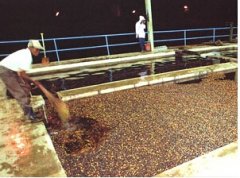
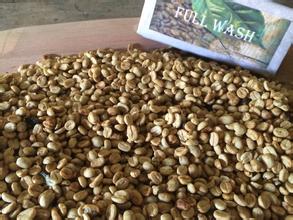
a. Washing type / non-washing type: in the sink, after rubbing with water and utensils, the pulp and gum are removed and dried, which is called washed coffee beans with uniform quality. Non-washing type: after the sun is naturally dried, the pulp and peel is removed by a sheller, and its quality is unstable. b. The fruit of flat bean / round bean coffee is made up of two oval seeds opposite each other. The connected side

The difference between candle and yega sherry coffee beans The flavor description of sidamo coffee
The difference between candle and Yirgacheffe coffee beans The flavor description of Sidamo coffee Because Ethiopia's grading system is still very backward, it can be divided into special grades (usually referring to washed Yirgacheffe and Sidamo)1 grade 2 grade 3 grade 4 and 5 grades. Impurities such as small stones or twigs are usually found in Ethiopian sun-baked beans

What is the flavor of 90 + red treatment to describe the producing area information of cultivated varieties?
Exchange of professional baristas Please pay attention to Coffee Workshop (Wechat official account cafe_style) Red treatment: a special treatment carried out by the 90 + team through their own patented drying technology, the fruits with shells will show different degrees of red, from light red to ruby red, this treatment will increase the aroma of coffee again, and the fruit flavor and sweetness will be more pronounced. Percy Perci name

The Common sense of Coffee beans correctly using Q Grader to Grade Coffee
In the Q Grader course (a professional coffee bean grading course), I found that people can't be 100% objective when grading coffee beans. Everyone's experience of coffee is different, because we have different taste buds, different noses and different brains, so we can't judge the taste of coffee objectively. For example, when I have a drink

Coffee beans are also divided into "aristocratic and poor classes".
Coffee quality Evaluation Coffee producing countries have their own grading methods and quality evaluation standards in order to grade their harvested coffee, of course, there are also famous coffee mochas. Like Yemen in Matali, there are no countries with uniform export specifications and no coffee culture of the same style. If there are common evaluation criteria for coffee producers all over the world, it will be convenient for buyers.

Flavor description of graded Ginseng varieties in 90 + Ginseng planting area
For professional baristas, please follow the coffee workshop (Wechat official account cafe_style) Kemgin, ginseng W2 Level 7 Origin: 90 + Ethiopia Wellega (Waliga), Sidama (Hidamo) and Yirgacheffe (Yega Snow) producing areas. Altitude: 17502000m. Treatment: washing. Taste characteristics: White peach, lime, melon, ginseng, horn

The size, specification and grade of coffee beans. Fine coffee.
A, coffee can be divided into washing type and non-washing type according to specifications, and can also be divided into flat beans and round beans. Washing type: in the sink, after rubbing with water and utensils, the pulp and colloid are removed and dried, which is called washing coffee bean with uniform quality. Non-washing type: after the sun is naturally dried, the pulp and peel is removed by a sheller, and its quality is unstable. The fruit of coffee is made up of two oval shapes

Grading defective beans according to the proportion of sieve and defective beans is an important factor that destroys the flavor of the final coffee.
Boutique coffee (specialty coffee) is also called specialty coffee selection coffee. It refers to coffee made from a small number of raw beans with excellent taste grown in an ideal geographical environment. Depending on the special soil and climatic conditions in which they grow, they have outstanding flavor. After strict selection and classification, this kind of coffee is hard in texture, rich in taste and stylish.

Coffee common sense size specification and grade of coffee beans
A, coffee can be divided into washing type and non-washing type according to specifications, and can also be divided into flat beans and round beans. Washing type: in the sink, after rubbing with water and utensils, the pulp and colloid are removed and dried, which is called washing coffee bean with uniform quality. Non-washing type: after the sun is naturally dried, the pulp and peel is removed by a sheller, and its quality is unstable. The fruit of coffee is made up of two oval shapes

The flavor and taste characteristics of specially selected red honey in Honduras coffee Gongma Angua producing area? Hongdu
Professional coffee knowledge exchange more coffee bean information please follow the coffee workshop (Wechat official account cafe_style) Honduran coffee Gongma Angua special selection of red honey processing flavor and taste characteristics? What is the variety of coffee beans in Honduras? Coffee in Honduras is imported from El Salvador. Honduras produces high-acid high-quality coffee. Like it

90 + Clinique Flavor description introduces the characteristic grading treatment method of planting area
For professional baristas, please follow the coffee workshop (Wechat official account cafe_style) chembe (Clinique N2 Level 7) Origin: 90 + Ethiopia Yigacheffe (Yega Snow) producing area. Altitude: 17502000m. Treatment: insolation. Taste characteristics: the palate is thick and heavy, with earthy, dark fruit and a slight citrus taste. Kemgin

Colombian coffee is classified according to defective beans.
According to the classification of defective beans, defective beans can be divided into two types:-first: called first-class defects-second: called second-level defects. First: main defects (defects that affect the taste characteristics of coffee): black beans. Private exporters of moldy beans or sour beans: no more than 12 national coffee committees: no more than 8 first-level defective beans, second: secondary defects
Characteristics of Colombian boutique coffee beans Colombian boutique coffee
According to the classification of defective beans, defective beans can be divided into two types:-first: called first-class defects-second: called second-level defects. First: main defects (defects that affect the taste characteristics of coffee): black beans. Private exporters of moldy beans or sour beans: no more than 12 national coffee committees: no more than 8 first-level defective beans, second: secondary defects

Grade planning of coffee beans the difference between instant coffee and other coffee
Honduras (Central America) produces water-washed coffee beans in mountain areas, which is highly rated and is a good product of low-real estate coffee beans. Producing areas are: Santa Barbara, Gulanas, Komayagua, Cholutka and so on. Coffee beans from medium to large particles, with a soft taste. It is divided into 3 grades according to the altitude of the place of origin. The excellent varieties of Costa Rica (Central America) have strong taste.

90 + single bean grading standard 90 + single bean flavor description variety planting area
For the exchange of professional baristas, please pay attention to the coffee workshop (Wechat official account cafe_style) L4, L7, L12, L21, L39, L95, L195L means Level, which is classified according to the quantity produced, the refinement of processing, the difficulty and the rigor of selection. The higher the number, the lower the output, the more refined the processing, the more complex and difficult, and the stricter screening, but 90 +
China Coffee Network discount recommendation [Special offer] Costa Rican Red Honey treated Fine Coffee Bean Red Honey
4. Honey treatment Today, honey treatment is used in almost all the producing areas of Costa Rica. This method is also widely spread throughout Central America. Because the surface mucosa of coffee beans is extremely sticky and smooth and the sugar content is extremely high, it is often called honey. In the process of honey treatment, coffee will leave some or all of the honey when it is dried. After picking, grading and peeling the coffee fruit, it will be
The concept of Fine Coffee Specialty Coffee (1)
The traditional classification of coffee beans is usually based on the classification criteria defined by the coffee producing countries, and then agreed to become common in the international market and traded under such a tacit understanding. For a long time, coffee producing countries have their own classification and evaluation criteria for coffee, which serve as the pricing guidelines in the coffee market. But slowly in recent years, coffee consuming countries have begun to demand unified evaluation criteria.